
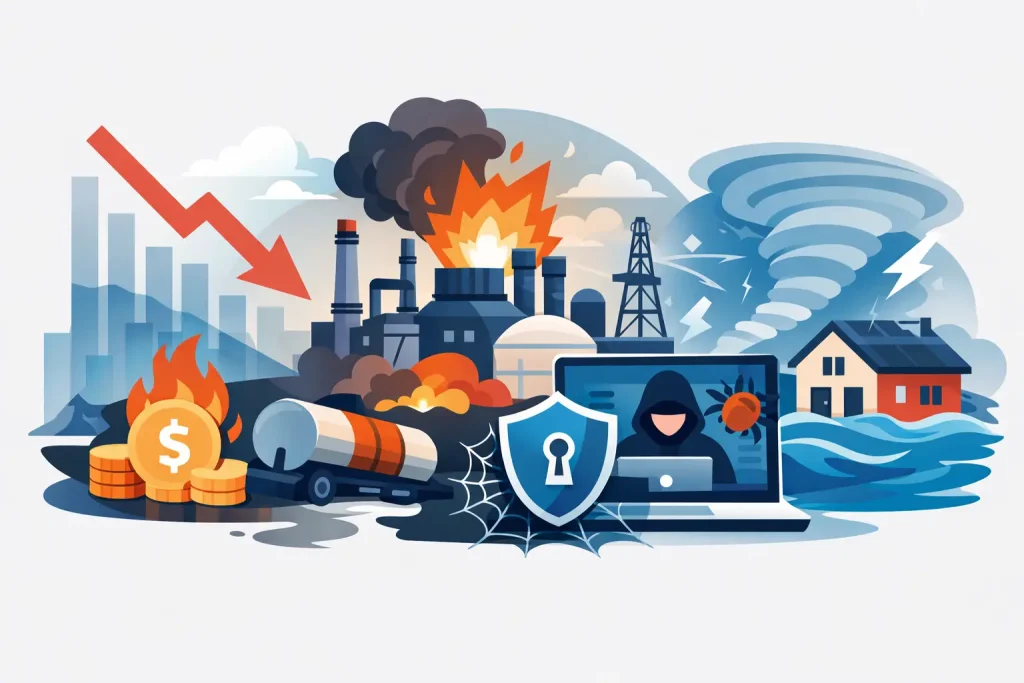
A major loss rarely announces itself politely. It arrives as a call before breakfast, a smoke-blackened warehouse, a flooded shop floor, or a finance director trying to work out whether the business can trade next week. The most revealing examples of major loss incidents are not simply tales of damaged property. They show how quickly a familiar workplace can become a scene of uncertainty, competing interests and urgent decisions.
For the policyholder, it is personal and immediate. For the insurer, it is a significant financial exposure. For the loss adjuster, it is the beginning of a careful job: establish what happened, identify what the policy covers, limit further damage and help a viable business find its feet again. It can be technical work, certainly, but it is never dull.
What turns a claim into a major loss?
There is no single pound figure that makes a loss “major”. A large national insurer may view a £250,000 claim differently from a small regional broker. The scale also depends on the type of business, the policy limits, the risk of interruption and the potential for liability claims to follow.
A modest fire at a specialist manufacturer can become a major incident if it destroys one essential machine with a six-month replacement lead time. Equally, a sizeable escape of water in an office block may be relatively contained if the premises can be dried quickly and staff can work elsewhere. The headline value matters, but so do time, dependency and disruption.
Major losses have another feature: facts are often incomplete in the early hours. People are understandably distressed. Records may be wet, burned, inaccessible or sitting on a computer that will not switch on. A good investigation therefore begins with calm observation rather than grand assumptions.
Examples of major loss incidents and what they reveal
Fire at commercial premises
A fire remains one of the clearest examples of a major loss incident. The visible damage is often only part of the story. Flames may have affected stock and machinery, while heat, smoke and firefighting water spread well beyond the seat of the fire. A business can lose its production area, its computer servers, its packaging and its ability to fulfil orders in one unhappy evening.
The early questions are practical. Is the building safe? Can undamaged stock be moved? Are alternative premises available? Can a competitor or subcontractor take on some production without surrendering the company’s customers in the process? These measures may cost money, but they can be cheaper than allowing a trading business to drift into permanent closure.
Cause also matters. A faulty electrical installation, arson, hot works carried out by contractors or careless disposal of smoking materials may all lead the investigation in different directions. It is not about treating every claimant as a suspect. It is about separating evidence from the stories that naturally multiply after a serious fire.
Flooding and escape of water
Flood losses come in two very different varieties: water arriving from outside, and water escaping from where it ought to have remained. The first may involve a river, surface water or overwhelmed drainage. The second can be a burst pipe, failed sprinkler system, leaking roof or a small fitting with an unexpectedly ambitious view of its capabilities.
In a commercial property, timing is everything. Drying equipment, strip-out decisions and specialist cleaning need to be organised promptly. Leave moisture trapped beneath floors or behind walls and a claim that might have been manageable can become an expensive mould problem months later.
For a retailer, the critical loss may be stock and trading time rather than the fabric of the building. For a landlord, it may be the loss of rental income and disputes over who was responsible for maintenance. For a homeowner, irreplaceable family possessions may matter more than the reinstatement estimate. The adjuster must understand what has actually been lost, not merely measure the square footage of wet carpet.
Theft, burglary and employee dishonesty
Theft claims have a particular knack for producing contradictions. A forced door may suggest an obvious burglary, but the inventory does not quite match the stock records. CCTV has a conveniently misty view. Keys, alarm codes and access rights become suddenly relevant.
A major burglary at a jeweller, electronics wholesaler or builders’ merchant can involve high-value stock, security obligations and questions about valuation. The immediate task is to preserve evidence, notify the police and secure the premises. The less immediate task is to reconstruct what was there before the loss. Purchase invoices, stocktakes, sales data and supplier records often tell a firmer story than memory alone.
Employee theft or fraud is more awkward still because it brings relationships into the claim. The person suspected may be a long-serving colleague, a family member or someone trusted with the books. Claims should be handled fairly and discreetly, with evidence gathered properly. False allegations can be ruinous; blind acceptance can be costly. Neither is a substitute for patient investigation.
Storm damage and collapsed roofs
A violent storm can remove roof coverings, drive rain through vulnerable elevations and topple trees onto buildings or vehicles. At industrial sites, the concern may extend to fragile rooflights, cladding and stored goods. Where a roof has partially collapsed, safety takes precedence over every argument about policy wording.
Storm claims often turn on maintenance. Was the damage caused by a one-off event of unusual force, or did the weather merely expose a roof that had been deteriorating for years? The answer is not always comfortable, particularly when old repairs, blocked gutters or historic leaks are found. Insurance is designed for sudden, unforeseen loss, not as a substitute for routine upkeep.
That said, it is too easy to pronounce a building poorly maintained from a photograph taken after a gale. The right approach considers inspection records, weather evidence, previous repairs and the condition of neighbouring properties. A sound conclusion should survive more than a raised eyebrow in a meeting room.
Machinery breakdown and business interruption
Not every major loss involves blue lights or a cordoned-off building. A single machinery failure can stop a production line and cause losses that rapidly outweigh the cost of the damaged part. This is especially true where the machine is bespoke, imported or dependent on specialist engineers.
Business interruption is where the human and commercial consequences become most apparent. The claim may include lost gross profit, increased costs of working, overtime, temporary premises and the expense of retaining key staff. It is also where a poorly understood policy can lead to unpleasant surprises.
The correct indemnity period is crucial. Replacing a machine is not the same as restoring turnover. A business may need months to regain customers, rebuild stock and return to normal margins. Conversely, a business already in decline cannot fairly attribute every disappointing sale to the insured event. Accounts, forecasts, order books and market conditions all deserve a proper look.
Why the first response shapes the whole claim
The best major-loss handling is neither an insurer writing a blank cheque nor a claimant being buried in paperwork while the water rises. It is purposeful. Secure the site, protect people, salvage what can be saved, keep records and communicate clearly.
Policyholders help themselves by retaining invoices, photographs, maintenance records and current stock information before anything goes wrong. That is not glamorous advice, but neither is standing in a soaked warehouse trying to recall the value of stock purchased eighteen months ago. Brokers can also be invaluable, especially when they understand the client’s operations rather than just the renewal schedule.
The adjuster’s role is sometimes misunderstood as simply reducing the payment. Properly done, it is about getting to a well-supported settlement while controlling avoidable cost and preventing a temporary disaster from becoming a business-ending one. That requires technical knowledge, a sceptical eye and enough tact to explain difficult decisions without sounding like a policy document in shoes.
The story behind the schedule of loss
Claims files are full of figures, reports and policy clauses, but the memorable cases are always about people coping with an unwelcome turn of events. The factory owner watching smoke rise from decades of work. The shopkeeper opening after a flood with half the shelves empty. The employee asked to account for records nobody thought worth keeping until they vanished.
That is part of what makes this profession such fertile ground for storytelling. In The Perils of a Loss Adjuster, Richard Thurstan draws on the oddities, tensions and occasional absurdities that sit behind the formal language of insurance. A major loss can be serious without every account of it being solemn.
If there is one sensible habit worth carrying away from these incidents, it is this: prepare while the building is dry, the alarm works and everyone has time to answer a question properly. When misfortune does arrive, clear records and clear heads are worth rather more than clever hindsight.