
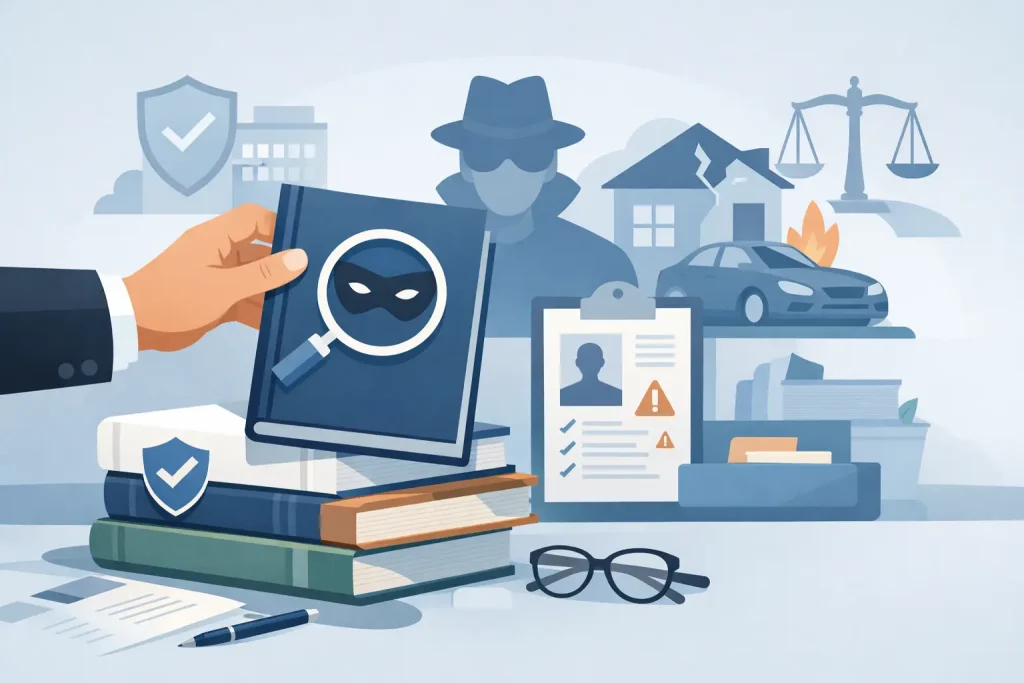
The trouble with hunting for a book on insurance fraud is that far too many sound as if they were written by a committee in a windowless office. The subject itself is anything but dull. Fraud sits where money, motive, panic, opportunism and human folly all meet, which means the best writing on it ought to have a pulse.
For readers in and around the insurance world, that matters. If you work in claims, broking, underwriting or loss adjusting, you do not need another worthy volume full of stiff jargon and grand statements. You need something that understands how suspicious claims actually appear in real life – often untidy, occasionally brazen and sometimes almost comic until the numbers are added up. For general readers, the appeal is slightly different but no less real. Fraud stories let you see behind the tidy wording of policies and into the strange theatre of what people will say, do and invent when money is at stake.
What makes a good book on insurance fraud?
A good one does two jobs at once. First, it explains how fraud happens: the methods, the warning signs, the weak points in systems and the pressure points in claims handling. Second, it captures the human side of the business. Without that second part, you are left with a textbook. Useful, perhaps, but not something many people would choose to read after work.
The strongest books in this area tend to be grounded in lived experience. That does not mean every page must read like a lecture from a veteran adjuster in a pub, though there are worse ways to learn. It means the author should know what a dubious claim feels like before it is proved, how difficult it can be to separate error from deceit, and why the truth is not always revealed in a dramatic confession. More often, it emerges through patience, detail and a rather grim familiarity with human behaviour.
There is also a question of balance. A worthwhile book on the subject should not treat every claimant as a villain waiting to be exposed. That is poor practice and worse writing. Fraud is serious, but so is the risk of assuming bad faith where there is none. The best authors understand the difference between an honest muddle, an exaggerated loss and a calculated fabrication.
Why insurance fraud makes such compelling reading
Insurance fraud is one of those subjects that sounds niche until you get near it. Then it becomes a study of character. A claim file may begin with a burst pipe, a missing watch or a suspicious fire, but very quickly it turns into a story about pressure, timing, credibility and contradiction. People reveal themselves in odd ways when they are questioned about money.
That is why books built around real cases or memoir-style experience tend to work so well. Readers are not simply learning definitions. They are watching decisions unfold. They see how a claim develops, how evidence fits or fails to fit, and how professionals have to judge not only facts but people. A dry explanation of fraudulent intent will never be as memorable as an account of someone trying far too hard to sound innocent.
There is a practical value here too. For those in the trade, reading well-told fraud stories sharpens instinct. It reminds you that fraud is rarely as neat as training slides suggest. For everyone else, it offers a rare look behind the scenes of an industry that most people only encounter when something has gone wrong.
The difference between theory and experience
This is where many books part company. Some are written from a policy, compliance or academic angle. Those can be useful if your chief interest is regulation, frameworks or data analysis. But they often miss the texture of the job – the interviews, the site visits, the odd explanations, the claims that collapse under one simple follow-up question.
Experience-led writing has a different flavour. It understands that fraud work is as much about judgement as procedure. One case may look outrageous and yet prove legitimate. Another may seem routine until a date, receipt or careless remark opens a trapdoor beneath it. An author who has actually dealt with claims over many years will usually be better at showing those shades of grey.
That does not mean memoir is automatically superior. Pure anecdote can drift into pub lore if the writer has no discipline. The sweet spot is a book that combines real stories with clear insight. Readers should come away entertained, certainly, but also wiser about how fraud investigations really function and why they matter.
Who should read a book on insurance fraud?
The obvious audience is insurance professionals. Claims handlers, adjusters, investigators, underwriters and brokers will all recognise something in a sharp, well-observed account of fraud. It can validate hard-earned experience, challenge lazy assumptions and provide fresh perspective on familiar patterns.
But the readership is wider than that. Memoir readers often enjoy books that open the door to closed professions. There is a reason medical memoirs, legal stories and police accounts have such appeal. They offer a backstage pass to working lives most people never see. Insurance, despite its reputation, is no exception. Behind the paperwork are thefts, accidental damage, catastrophe, negotiation and the endless ingenuity of people trying either to recover a genuine loss or to manufacture one.
Business readers can also get a great deal from the subject. Fraud exposes weaknesses in systems, incentives and oversight. It shows what happens when controls fail, when assumptions go untested and when small discrepancies are waved through because everyone is busy.
Signs that a book on insurance fraud is worth your time
The first sign is clarity. The author should be able to explain technical points without sounding pleased with himself. Insurance has enough jargon already. A good writer knows when to use specialist language and when to translate it into plain English.
The second is credibility. You want specifics, not vague claims about seeing it all. Real experience leaves fingerprints: the kind of detail that only comes from having sat across the table, walked through damaged properties, reviewed awkward documents and dealt with the aftermath of claims that never quite added up.
The third is tone. This may seem a smaller point, but it matters a great deal. Fraud is a serious issue with real costs for insurers, businesses and honest policyholders. Yet writing about it need not be joyless. A little wit, properly handled, helps the medicine go down. In fact, humour often suits the subject because some attempted deceptions are so clumsy that solemn prose gives them far too much dignity.
Finally, there should be some respect for complexity. Not every suspicious case is fraudulent. Not every honest claimant is consistent. Memory is patchy, stress alters behaviour and some genuine losses look improbable because life itself is improbable. A book that admits those complications is far more trustworthy than one that divides the world neatly into heroes and crooks.
Why storytelling matters more than most people think
If a reader remembers a case years later, it is usually because the story carried the lesson. Narrative is not decoration in this field. It is the vehicle that makes technical understanding stick. You remember the implausible sequence of events, the overlooked inconsistency, the telling conversation, the moment a claim changed shape.
That is why books that blend professional insight with anecdotal storytelling often reach beyond the industry. They are not merely explaining fraud; they are showing how work, judgement and human behaviour intersect. Richard Thurstan’s The Perils of a Loss Adjuster sits naturally in that tradition, turning decades of practical insurance experience into something informative and genuinely readable.
For professionals, that sort of storytelling can feel refreshingly honest. It reflects the reality that the job is rarely tidy and never entirely predictable. For non-specialists, it makes an opaque world accessible without talking down to them.
Choosing the right kind of insurance fraud book for you
It depends what you want from it. If you need procedural depth for work, a more formal treatment may be useful, provided it is current and properly grounded. If you want insight into how fraud presents in the real world, a memoir or case-led book is often the stronger choice. If your main aim is simply to enjoy a sharp, informed read while learning something substantial, then narrative-led writing is hard to beat.
There is also the matter of pace. Some readers want chapter after chapter of technical analysis. Others would rather absorb the same lessons through incidents, personalities and hard-won observations. Neither preference is wrong. The trick is not to mistake one for the other. Buying a procedural manual when you wanted a rattling insider account is a bit like ordering a pint and being handed an annual report.
The best books on this subject respect the intelligence of the reader without burying them under terminology. They reveal the mechanics of fraud, yes, but they also reveal the profession tasked with spotting it – its frustrations, absurdities, moral pressure and occasional dark comedy.
If you are looking for a book on insurance fraud, choose one that sounds like it has actually met the people it describes. Facts matter, but voice matters too. A seasoned guide can take a subject that ought to be dry as old cardboard and make it vivid, sharp and unexpectedly entertaining. And if a book manages that, you will not merely finish it better informed. You may find yourself looking at every improbable mishap with a slightly more educated eye.