
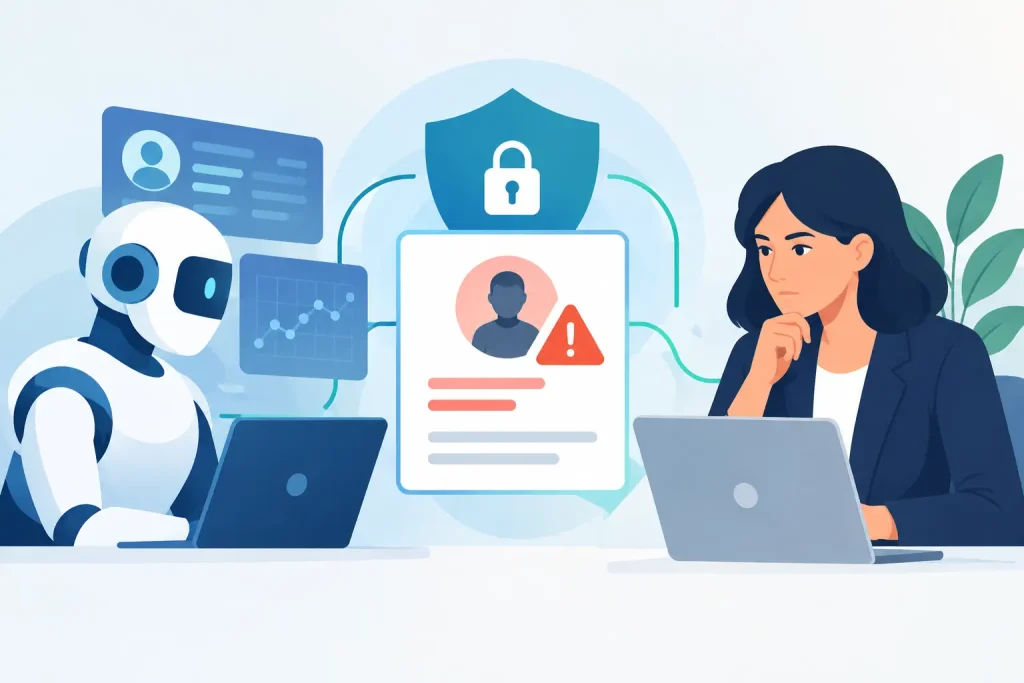
A suspicious claim rarely arrives wearing a striped jumper and carrying a sack marked ‘swag’. More often, it looks entirely ordinary: a stolen phone, a burst pipe, a damaged car, or a business interruption claim supported by a tidy-looking spreadsheet. That is why digital fraud detection has become so valuable in insurance. It can identify patterns and connections at a speed no human claims handler could match. But it cannot, on its own, tell the whole story.
For all the cleverness of modern systems, fraud remains a human activity. It is shaped by opportunity, pressure, imagination and, occasionally, a spectacular lack of judgement. The best fraud detection combines technology’s ability to sift enormous quantities of information with the seasoned curiosity of someone who knows when a claim simply does not smell right.
What digital fraud detection actually does
Digital fraud detection is the use of data, rules, analytics and increasingly machine learning to identify claims or transactions that may need closer examination. In an insurance setting, it can compare a new claim with previous claims, flag unusual timing, identify inconsistent personal details, assess the behaviour of a user online, or spot documents that appear altered.
The point is not to declare someone guilty because their claim falls outside a neat statistical pattern. Plenty of honest people have inconveniently unusual circumstances. The point is to direct scarce investigative time towards the claims where the available facts deserve a second look.
A well-used system may highlight that the same bank account appears across several unrelated claims, that a policy was taken out shortly before a loss, or that photographs submitted as evidence have appeared elsewhere. It may note a sudden change in contact details, repeated claims for similar losses, or an invoice that does not quite behave like a genuine invoice.
Each item, taken alone, may be perfectly innocent. Taken together, they can form a picture worth examining. That distinction matters. Fraud indicators are prompts for enquiry, not proof.
The claim is more than a collection of data points
Claims professionals have always looked for patterns. Long before dashboards and algorithms, an experienced loss adjuster would notice the oddly precise estimate, the claimant who could not remember a basic detail, or the burglary where every high-value item had apparently vanished while the television remote remained untouched.
Technology has made those observations more systematic. It can cross-reference information on a scale that would previously have involved several filing cabinets, a kettle and a very patient administrator. Yet it has also created a temptation to trust the score on a screen more than the evidence in front of us.
A fraud score is useful, but it has no lived understanding of a flooded kitchen, a frightened policyholder, or the chaos following a genuine fire. It does not know that a claimant may appear evasive because English is not their first language, because they are distressed, or because they have spent three days ringing insurers, builders and their bank. Nor does it understand that some people keep receipts in a shoebox dating back to 1994, while others cannot find one for a washing machine bought last Tuesday.
That is where human judgement earns its keep. A good investigator asks sensible questions, listens carefully to the answers and tests the account against the physical evidence. A good claims handler also remembers that the policyholder is not an adversary merely because a computer has raised an eyebrow.
Where the digital trail is especially useful
Digital tools are particularly effective where fraud depends on repetition, coordination or fabricated evidence. Organised fraud often leaves small traces across multiple claims: shared addresses, reused telephone numbers, familiar repairers, repeated witnesses or identical wording in supposedly independent statements.
Document analysis can be equally revealing. A receipt may contain mismatched fonts, inaccurate VAT details, impossible dates or a company number belonging to a completely different business. Image checks can indicate whether a photograph was taken when claimed, edited, or lifted from a previous loss. None of this requires a detective in a trench coat, although a healthy scepticism remains a fine professional accessory.
The growing use of generative AI has made this work more awkward. Convincing invoices, emails and images can now be produced in moments. That does not mean every polished document is false, nor that claims teams should treat technology as a villain in its own right. It means verification matters more. Checking suppliers, seeking original records, comparing documents with known formats and, where appropriate, inspecting the damage remain sensible disciplines.
The same applies to application fraud. A policy obtained using false information can create difficulties long before a claim occurs. Digital checks at quote and policy inception can help identify inconsistencies early, reducing the chance of a messy dispute after a loss. Prevention is usually cheaper, kinder and less theatrical than trying to unpick a false claim when everyone is already cross.
The danger of chasing the wrong claim
The obvious risk in fraud detection is missing a dishonest claimant. The less discussed risk is treating an honest one as though they have tried to raid the Bank of England.
False positives waste time, delay valid settlements and damage trust. In insurance, that trust is often at its most fragile when a customer has just had a car written off, a home damaged or a business interrupted. A rigid process can turn a bad day into a very poor view of the insurer.
This is why detection rules need regular review. A model trained on yesterday’s fraud may be poor at spotting tomorrow’s, and it may unfairly flag particular groups if the historic data contains bias. Claims teams should understand what their systems are measuring, what they are missing and when a referral needs an experienced pair of eyes rather than an automatic rejection.
There is also a legal and ethical point. Personal information must be handled lawfully and proportionately. The desire to prevent fraud does not provide a free pass to gather every scrap of data imaginable or to make unexplained decisions about people. Good governance is not bureaucratic garnish. It protects customers, insurers and the integrity of the investigation.
Better questions make better investigations
The most productive fraud enquiries tend to begin with a simple question: what does not fit, and is there an innocent explanation?
Suppose a household claim includes an expensive watch, a designer handbag and several electronic items, all without receipts. That may warrant enquiry. It may also describe a perfectly genuine household where receipts were lost in the same incident or never retained. The useful next step is not an accusation. It is a calm request for alternative evidence: photographs, warranty papers, bank statements, repair records or confirmation from a retailer.
Likewise, a late-reported accident is not automatically suspect. People do delay reporting incidents for all sorts of reasons, including uncertainty about whether they need to claim. But if the delay sits alongside newly arranged cover, contradictory vehicle damage and an account that changes every time it is retold, the questions become more pointed.
This is where claims experience cannot be bought off the shelf. It is built through hundreds of conversations, site visits, awkward silences and the occasional claim file that becomes stranger with every page. Richard Thurstan’s The Perils of a Loss Adjuster draws much of its interest from that very territory: the gap between the neat theory of insurance and the gloriously untidy behaviour of real people.
How claims teams can use technology without losing judgement
The strongest approach is not technology versus people. It is technology doing the repetitive, wide-ranging work while people apply context, empathy and professional challenge.
Start by making referral reasons intelligible. If a claim is flagged, the handler should be able to see whether the concern is duplicate documentation, a known connection, unusual timing or something else. A mysterious red marker encourages poor decisions and makes it harder to explain an investigation fairly.
Next, separate triage from outcome. A digital fraud detection tool can help prioritise a file, but a decision to decline a claim should rest on evidence, policy wording and a properly conducted investigation. The distinction protects both the customer and the insurer.
Finally, feed learning back into the process. Investigators know which alerts produce worthwhile enquiries and which create noise. Their findings should refine rules, improve training and expose emerging fraud methods. A system that never learns is merely an expensive filing cabinet with opinions.
The useful habit, whether examining a sophisticated data alert or a dog-eared paper claim form, is to stay curious without becoming cynical. Ask for the evidence, test the explanation and keep an open mind. Fraudsters rely on rushed processes; honest customers rely on fair ones. Good claims handling has room for both vigilance and decency.
One Response